RECENT INSTALL. PRACTICAL ANSWERS.
Tank or Tankless? Choosing Hot Water That Fits Your Home
Tank or tankless. Gas or electric. Here’s how household size, fixtures and daily habits help determine the right fit.
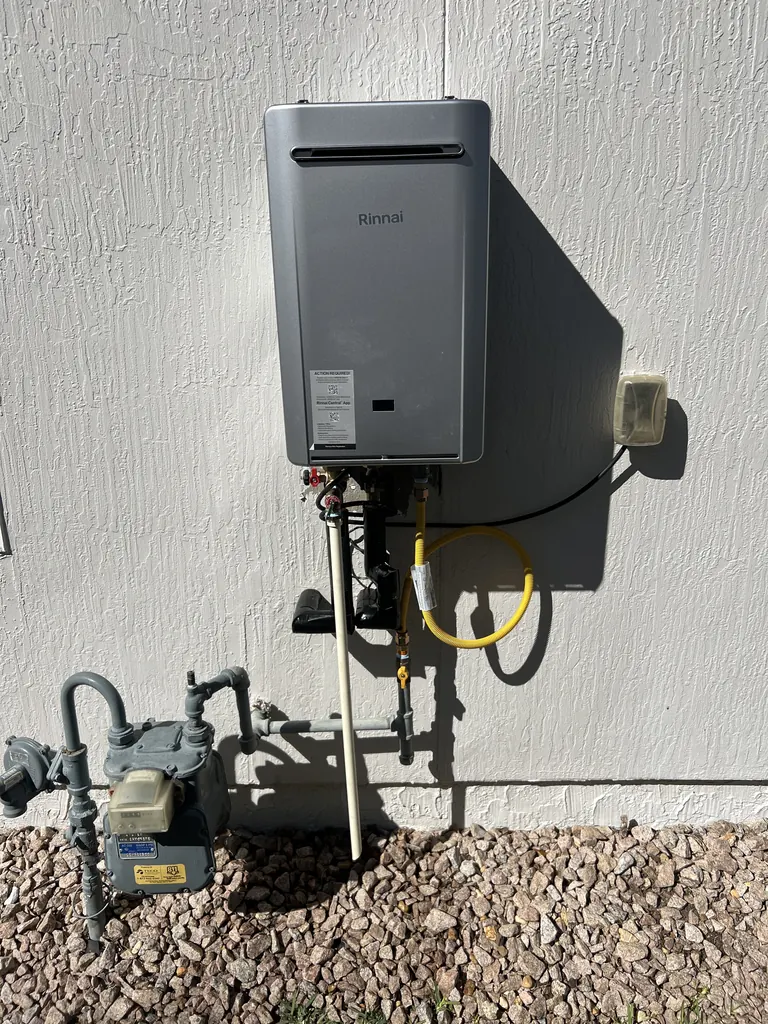
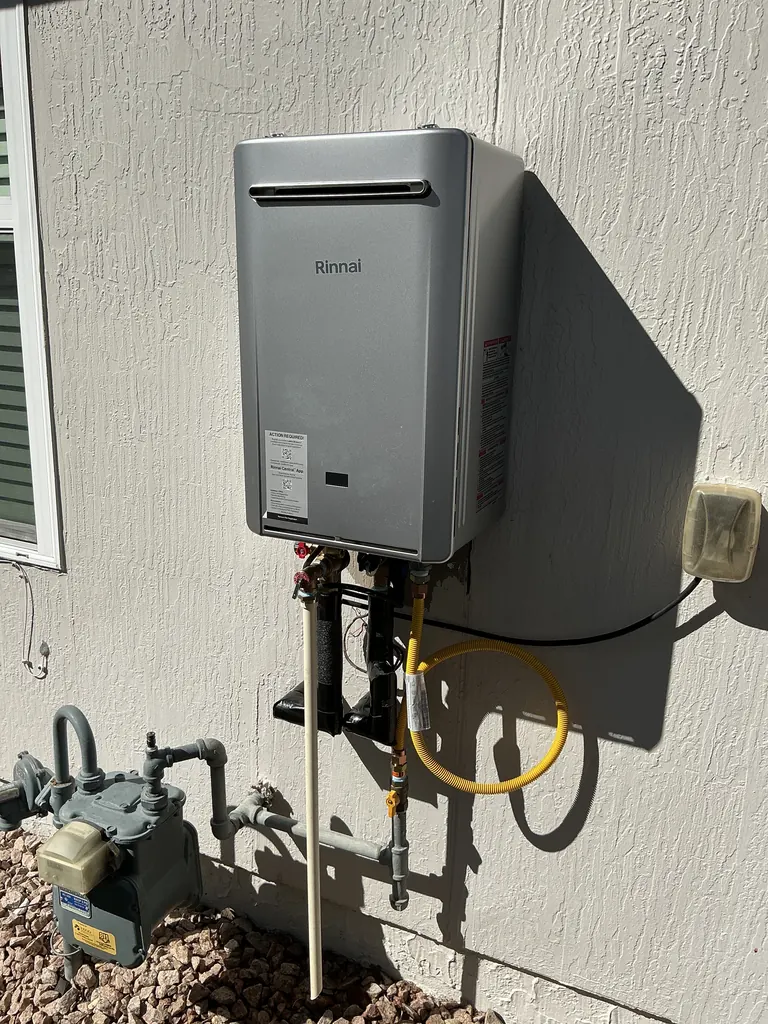
A good water heater should fit the way your household actually lives. This recent Advantage Plumbing installation features an outdoor Rinnai gas tankless unit—a compact option, but not the only answer for every home.
Tank vs. tankless: what changes?
A tank water heater stores hot water and keeps it ready. It can supply a substantial burst, but after heavy use, the supply needs time to recover. For sizing, look at its first-hour rating: how much hot water it can deliver in an hour starting with a fully heated tank. Tank gallons alone don’t tell the whole story.
A tankless water heater heats water as it flows through. It avoids keeping a large tank hot and can keep supplying hot water within its capacity. The limit is how much it can heat at once. “Endless” doesn’t mean every shower, faucet and appliance can run together without limits.
Gas or electric? That’s a separate choice.
Both tank and tankless systems come in gas and electric versions. The fuel and the storage method are two different decisions.
- Gas tank: Stores water and reheats it with a burner. Gas supply and proper combustion venting are part of the installation.
- Electric tank: Uses electric elements without combustion venting. A heat pump water heater is another electric tank option; it moves heat from surrounding air and can use substantially less electricity than standard resistance heating when installed in a suitable space.
- Gas tankless: Can suit households with substantial simultaneous demand when properly sized. We check gas supply capacity, the model’s indoor venting or outdoor placement requirements, and condensate drainage where applicable. Most gas tankless units also need electricity for controls and ignition.
- Electric tankless: Needs no gas or combustion vent. Whole-home models can require substantial electrical capacity and multiple dedicated circuits. An electrical load assessment may reveal panel or service upgrades. A small point-of-use unit for one sink isn’t a substitute for whole-house capacity.
Count people, fixtures—and what runs together.
Two people using a large soaking tub and multiple showerheads may need more capacity at once than a larger family taking staggered showers. Three bathrooms don’t automatically mean three showers running together.
For a smaller household, start with the busiest shower-and-sink combination. For a larger family or frequent guests, consider overlapping showers, laundry and dishwashing. Add plans for a new bathroom or tub before choosing equipment.
Tankless sizing has two parts: gallons per minute (GPM) needed at the same time, and the temperature rise from incoming cold water to the heater’s outlet.
For illustration, if two showers each draw 1.5 GPM of hot water from the heater and a sink draws 0.5 GPM, the heater must supply 3.5 GPM at the required temperature rise. Those are assumed hot-side flows, not universal fixture ratings. Actual demand depends on fixture flow and hot/cold mixing.
If incoming water were 70°F and the heater outlet were 120°F, the rise would be 50°F. Colder incoming water requires a larger rise and reduces available tankless flow. We check the manufacturer’s performance chart rather than relying on the largest GPM number on the box.
What about cost, waiting and maintenance?
Compare the complete installed cost, local energy prices and expected usage. Converting to tankless may involve gas, electrical, venting or piping changes; lower energy use doesn’t guarantee a quick payback.
Tankless also doesn’t automatically mean instant hot water at a distant faucet. Water still travels through the piping; a properly designed recirculation system can reduce that wait.
Every system needs care. For tankless, follow the manufacturer’s schedule for filter cleaning and flushing to control mineral scale, adjusted for water quality. Tank systems have their own maintenance requirements.
Choose around your home.
Tell us how many people live there, which fixtures overlap, your current fuel source and what you’d like to improve. Advantage Plumbing can compare water heater options and tankless installation around those needs. Request service or call (904) 247-9848.