
SMALL REPAIRS. CLEAR OPTIONS.
Running Toilet? A Rebuild May Be All It Needs
A running toilet, aging parts, and a careful repair—with a clear look at when a new toilet may be the better value.
A toilet that keeps running can waste water long after everyone has left the bathroom. Sometimes the porcelain still has plenty of life left, but the working parts inside the tank need attention.
At Advantage Plumbing, we look at what is causing the trouble, the condition of the other components, and whether a rebuild or a full replacement makes better sense for you.
Why rebuild a toilet?
The fill valve controls water entering the tank. The flapper holds water in the tank until you flush. The handle and chain lift the flapper, then let it close again. Over time, seals wear, rubber deteriorates, and moving parts can stop working reliably.
A worn fill valve can leave water running when it should shut off. A flapper that does not seal can let water escape into the bowl, causing the tank to refill even when nobody has flushed. An aging handle or linkage can also interfere with the flush.
When several parts are old, replacing them together can be more practical than repairing one component and leaving other worn parts behind. If the tank and bowl are sound and the toilet otherwise serves you well, a rebuild can extend its useful life.
A recent repair: old parts, a fresh start
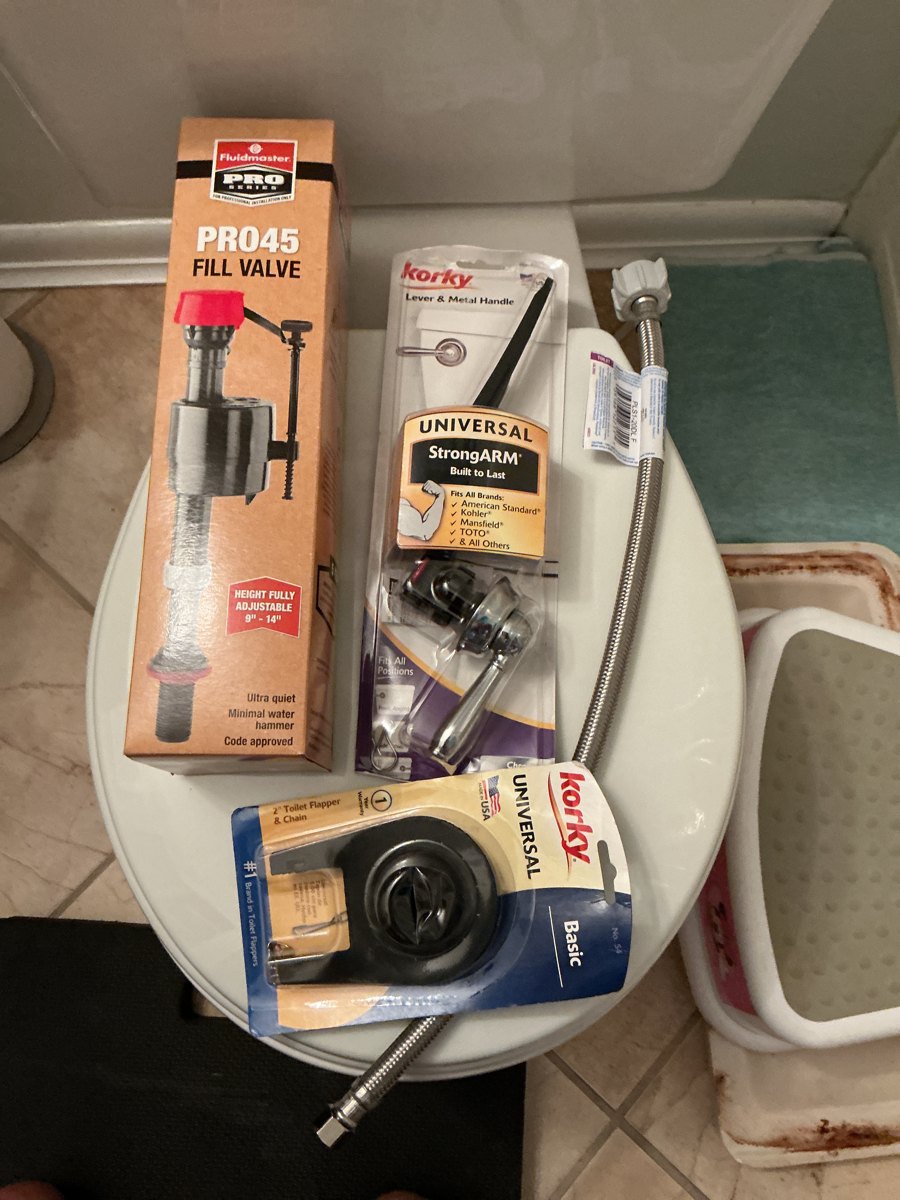
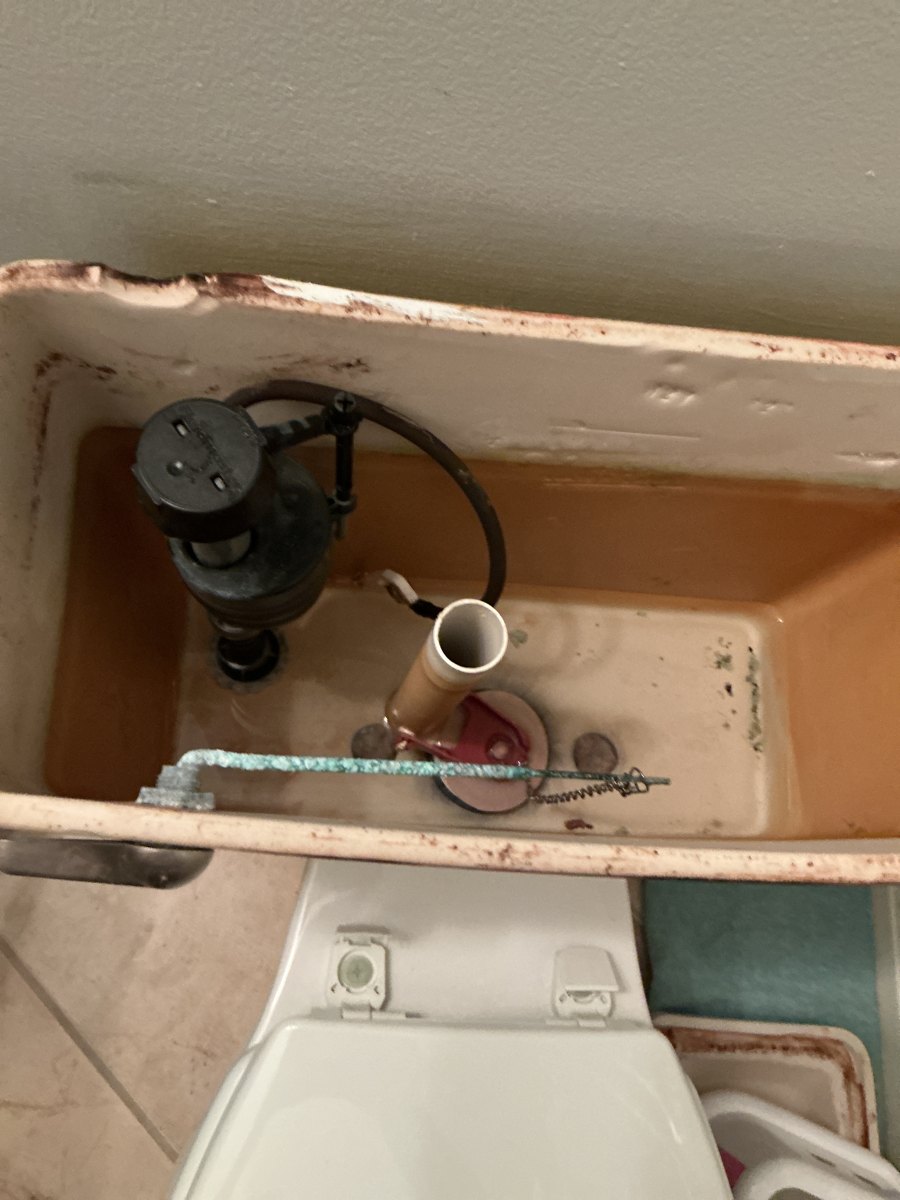
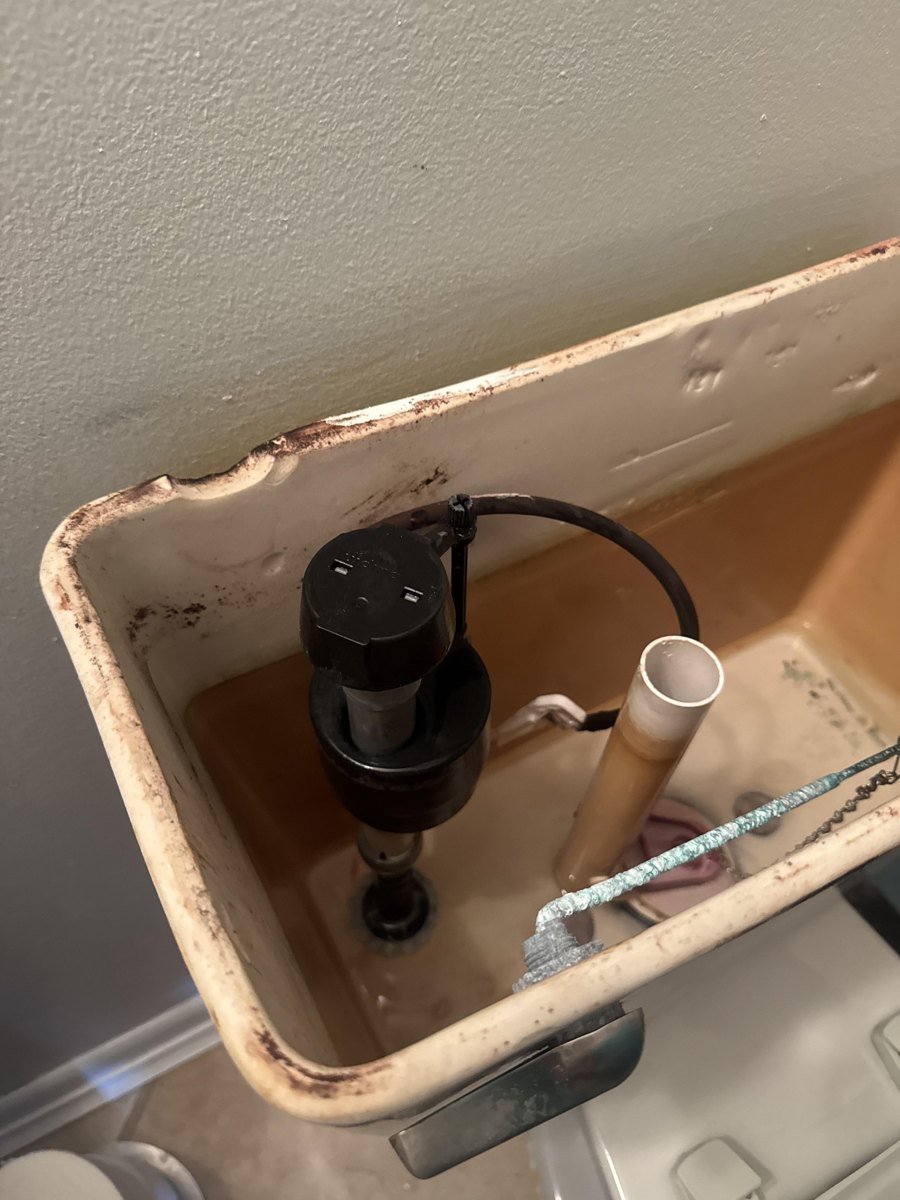
On this visit, the complaint was a toilet running at the fill valve. Our technician found that the other working parts were old as well. After getting approval for the repair, we replaced the water supply line, fill valve, flush handle, and flapper.
Our process: inspect, explain, repair, and test
- Find the cause. We inspect the toilet and identify what is allowing it to run, refill unexpectedly, or flush improperly.
- Explain the options. We discuss the worn parts and proposed scope, compare repair and replacement where appropriate, and get approval before proceeding.
- Replace and adjust the parts. For this rebuild, we removed the old supply line, fill valve, handle, and flapper and installed the replacements. The exact scope depends on the toilet and its condition.
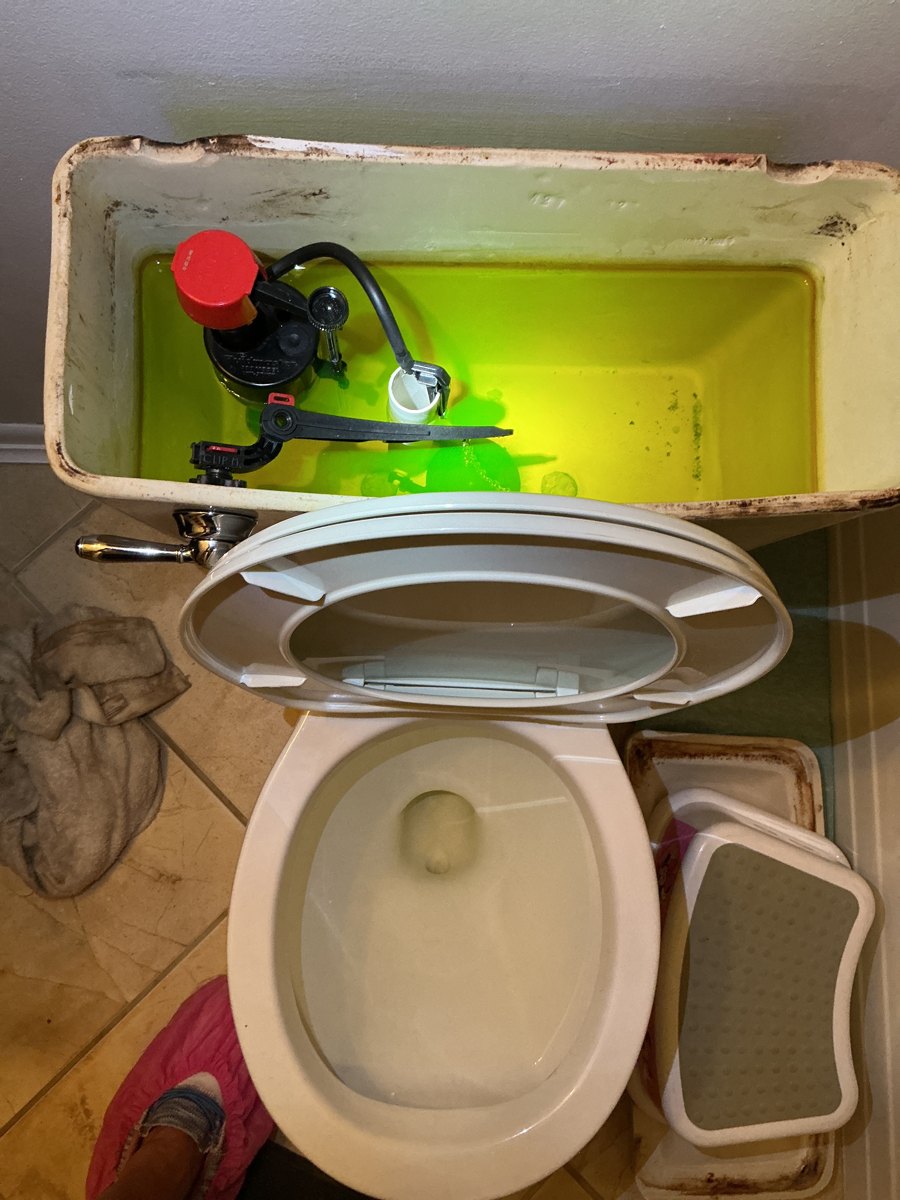
- Test the repair. We check flushing and refilling and test for leaks. On this call, that included a food-coloring test to check the seal between the tank and bowl.
- Finish the visit. Our technician tightened the toilet seat, cleaned the work area, and showed the occupant the completed repair, including a demonstration flush.
Why the colored water?
The bright water in the photo is part of the test. Food coloring in the tank helps us check whether water is slipping past the flapper into the bowl without flushing. On this visit, no color showed up in the bowl during the test.
This is a useful check for a leak you might not hear. The EPA also recommends food coloring to check for toilet leaks. A successful dye test checks for that internal leak; we also check the toilet's operation and the connections involved in the repair.
A new toilet may cost only a little more
We also offer full replacement with an ADA-compliant American Standard comfort-height toilet. Depending on the rebuild scope and installation conditions, a new toilet can cost only a little more than rebuilding the existing one.
That makes replacement worth comparing before spending money on an older fixture. A taller seat can make sitting down and standing up easier for many adults; American Standard offers these options in its Right Height range. We help choose a model that fits the bathroom and the people using it.
Replacement may be the better value when the porcelain is damaged, flushing problems persist, or the existing height no longer suits you. A rebuild can be the practical choice when the fixture is sound and worn components are the main issue. We explain the actual cost difference so you can choose.